



Hidden inside Manhattan’s bustling 34th Street–Herald Square subway station is a world you’d never expect: Nōksu, a 2024 Michelin-starred, 15-seat tasting counter where nine deeply technical, deeply intentional plates are prepared with almost scientific precision — under the hum of New York City.
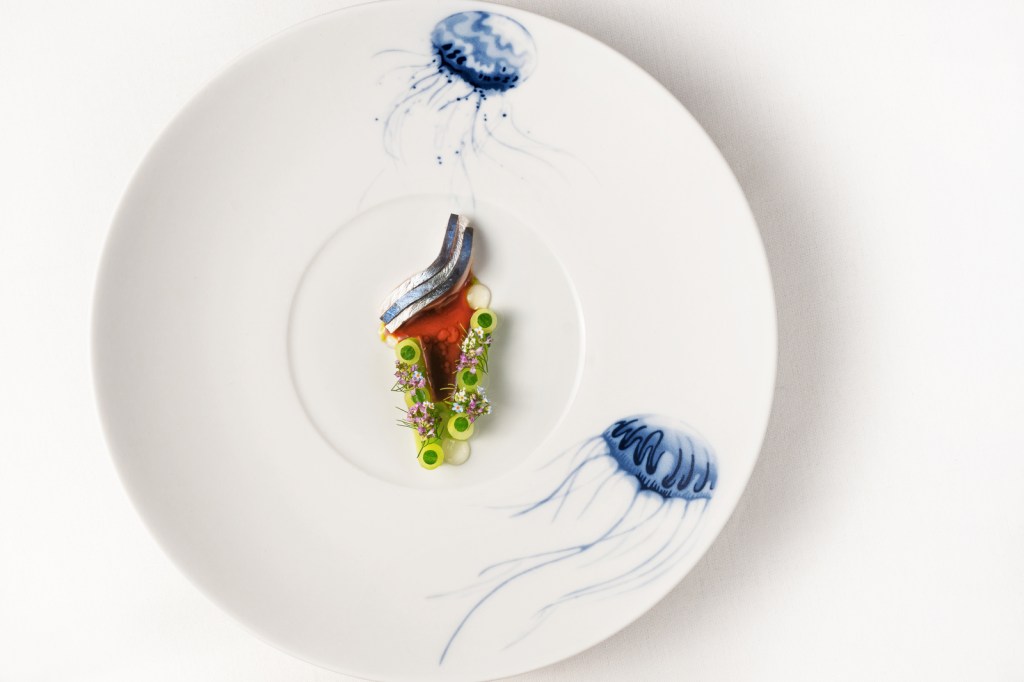
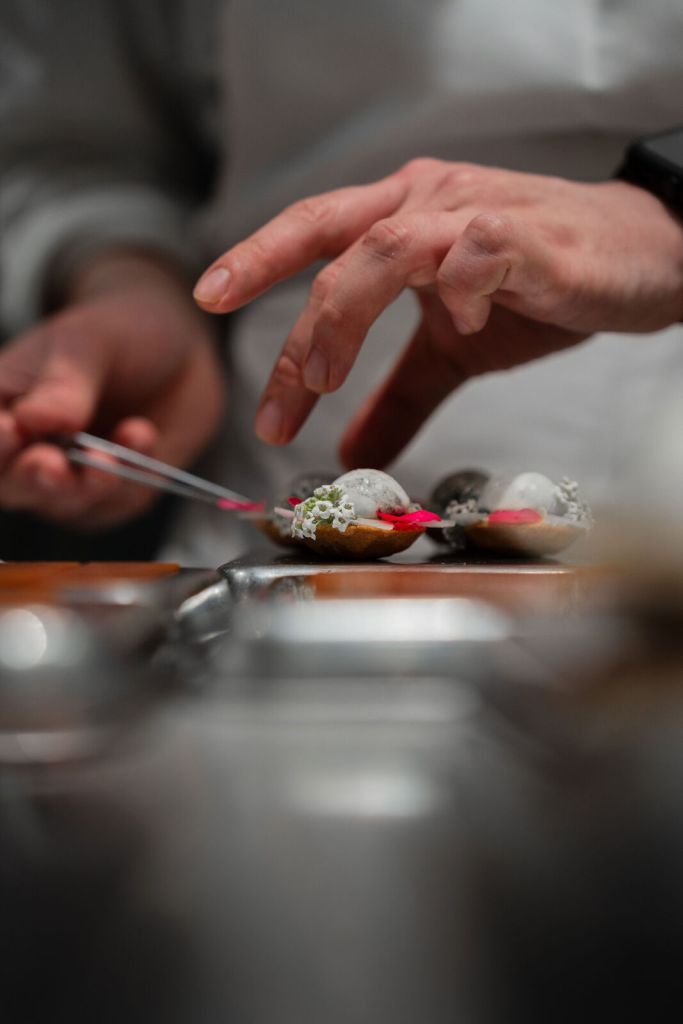


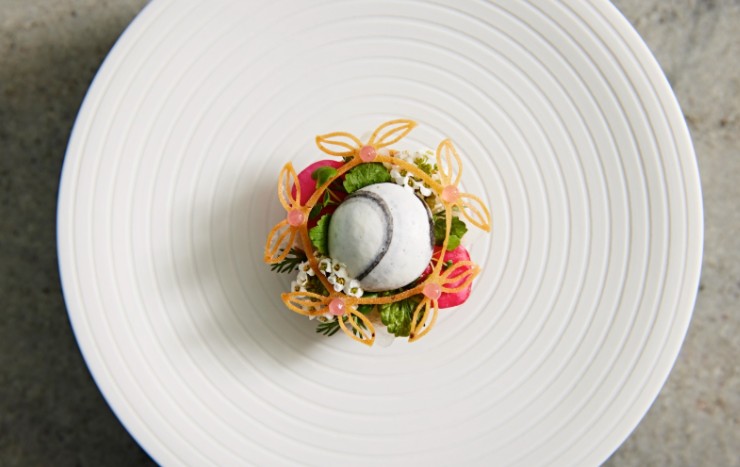
The tasting menu — $245 per person — consists of seafood-forward plates like hen-egg custard tucked under grilled surf clams and crowned with caviar, horsehair crab folded into compound butter, puffed duck feet with restrained elegance, and seasonal gizzard shad layered in minimalist geometry. It’s a globally-infused, culturally layered dining experience — marrying Korean technique, French precision, Japanese minimalism, and Chinese influence, all choreographed within just 12 counter seats.
- There are no substitutions.
- No refunds.
- No exceptions for vegans, gluten-free diners, or anyone avoiding seafood, shellfish, dairy, or allium.
Precision isn’t just a technique here — it’s the philosophy.
And at the center of it all is Chef Dae Kim, 29 years old. A Seoul-born, Chicago-raised former Per Se alum who didn’t train to become a culinary star because he loved cooking.
In fact:
“My passion is not cooking,” he confesses.
“I hate cooking at home.”
So how does someone without a traditional love for the industry end up directing such a daring and disciplined concept in one of the most competitive fine-dining landscapes in the world?
Because the kitchen wasn’t about passion for Kim. It was the first place he ever felt valuable.

How Identity Gets Welded to Performance
Identity doesn’t fuse with performance all at once. It happens in stages:
- Recognition
Kim enters the kitchen by accident. Not to create — but to cope. In that space, he’s praised, noticed, and given a sense of importance. That moment rewires the equation: performance equals worth. - Repetition Under Pressure
From dishwasher to Michelin-caliber line cook. From Chicago to Keller’s legendary Per Se. The more exacting the environment, the clearer the reward: work harder, produce excellence, and you belong. - Achievement Becomes Identity
Eventually, it’s not just that Kim creates masterful dishes.
It’s that he is only as valuable as what he creates.
The emotional shift is complete — from expression to identity.
Decoding the Drive: What Might Be Motivating Him
Chef Dae Kim hasn’t taken the Motivation Code (MCODE) assessment, but his behavior and choices reveal likely patterns of the following motivated abilities:
Achiever
“Achievers have a relentless drive to set and accomplish goals… and find satisfaction in surpassing previous limits.”
Kim doesn’t want to make food. He wants to be in the elite — “the 1% of the 1%.”
Driver
“Drivers push through obstacles and thrive under pressure. They move with urgency and expect others to do the same.”
Precision. Perfection. Relentless forward motion. No special requests.
Orchestrator
“Orchestrators bring order to chaos and align every detail with the goal. They thrive in roles requiring structure, planning, and coordination.”
Everything at Nōksu — from plating to plate movement — is choreographed like an edible ballet.
These abilities, unrecognized, become unconscious patterns. And when those patterns get tied to self-worth, achievement becomes an emotional trap rather than a source of joy or impact.
When Performance Becomes Identity
In the Apple TV+ docuseries Knife Edge: Chasing Michelin Stars, a diner sends a dish back at Nōksu. Not because it’s undercooked or unsound — the customer simply doesn’t want it.
That moment unravels Kim.
Not because the dish failed. But because he did.
When identity is welded to output, “That dish didn’t work” sounds like “You don’t work.”
This isn’t about being fragile. It’s the cost of emotional over-identification.
When your work is the container for your identity, every critique becomes a crisis.
What About Us?
We’re taught to craft résumés, choose careers, build portfolios — as if the job title alone determines alignment. But roles can’t reveal why we unravel under critique or pressure.
Even decoding your motivated abilities isn’t enough — unless you understand this:
- Output is not identity.
- Worth is not earned through performance.
- And striving for excellence doesn’t mean you become your achievements
Strategic Reflection Prompt
Where have I made performance the proof of identity — instead of the expression of it?
Alignment Isn’t Bliss — It’s Ownership
Alignment doesn’t require you to love your work more. It requires you to know why you do it — and what part of you it’s feeding.
Who you are is not what you produce. But how you produce can teach you everything about who you are.
And when identity no longer rides on output, your genius gets to breathe — not perform.
About Giselle
I’m Giselle Hudson, a Business Diagnostic Specialist for leaders under pressure. I work with leaders managing teams, businesses, or nonprofits to bring clarity to situations where things aren’t working as expected — and it’s not fully clear why. I examine how decisions are being made, so you’re not reinforcing what’s not working, but moving forward with clear direction.
If you are carrying a decision that affects income, reputation, or organizational stability, don’t move it forward alone.
 Giselle Hudson | Pre-Decision Advisory for Leaders Under Pressure