


The mountain doesn’t care how badly you want it. Only how prepared you are to pay for it — in effort, energy, and investment.
- We glorify summits.
- We decorate the moment of “victory,” the peak photo, the big reveal.
- We lap up the grand speeches, the investor wins, the “We’ve hit 7 figures” posts.
- We make success look like something cinematic.
But in those moments between the climb and the photo, there is something that most don’t take into consideration:
If you don’t understand all the costs related to summitting, you will break before you break through.
Let’s talk about that. Let’s talk specifically about climbing Mount Everest. And finally, let’s talk about the leadership delusion we keep recycling in business:
- Big dreams, small budgets.
- High peaks, low preparation.
- Full ambition, half investment.
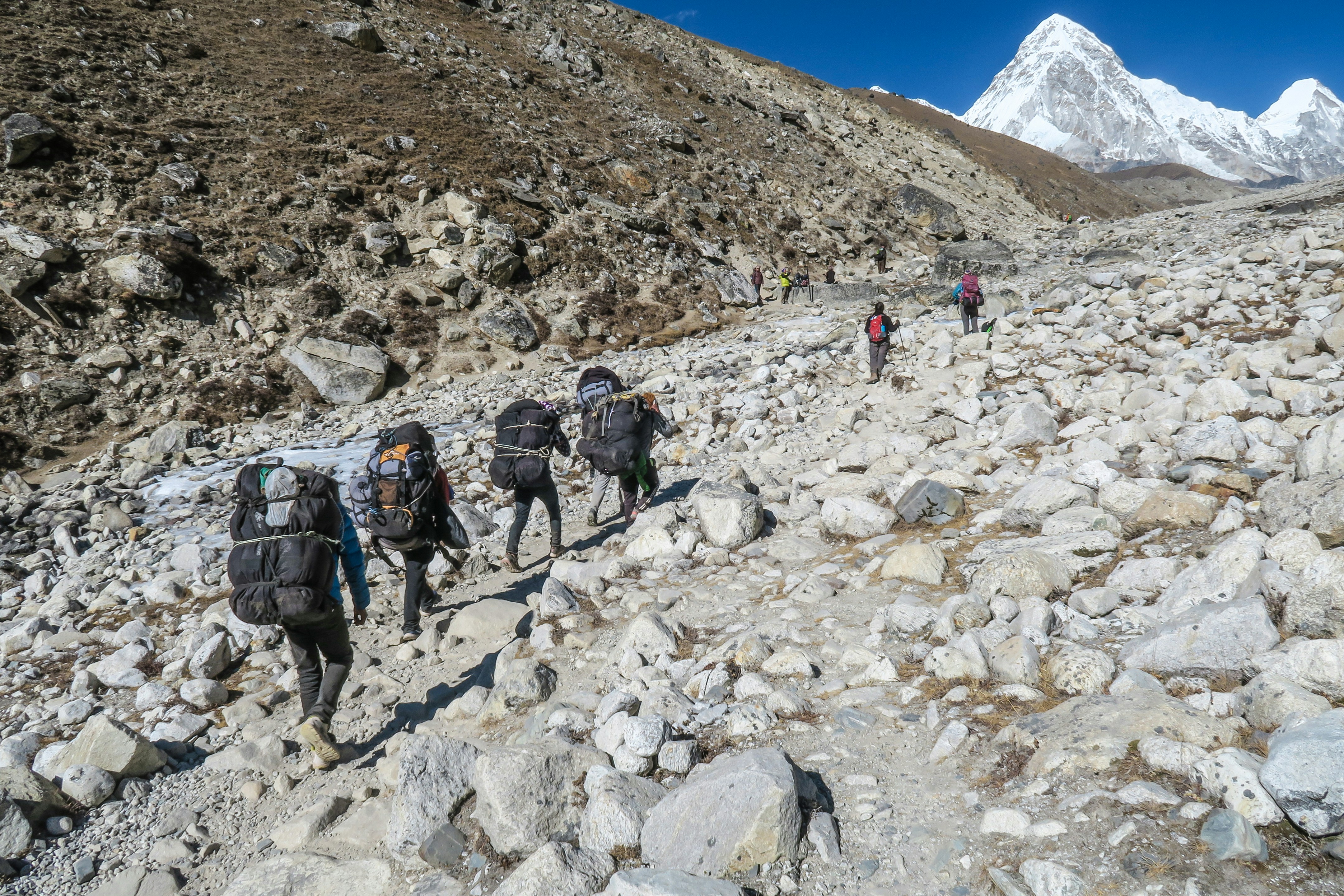
The Summit Illusion
The summit isn’t the story. The summit is the selfie.
The story is everything that came before the camera worthy moment.
- The base camp
- The acclimatization
- The waiting
- The rhythm
- The resisted impulse to rush
- The hidden costs
- The failures, the backups, the recovery cycles
- The logistics, both emotional and material
Same with business.
You celebrate the launch. But the real test of everything, including your faith, happened during the months you were:
- Clarifying your audience
- Aligning your team
- Breaking your mental models
- Naming risks and costs
- Balancing cashflow with courage
- Rewriting the same value prop 14 times
- Breathing through fear and fatigue
Summits make for good stories. But systems determine whether the story lives on long after the cheering and applause dies.
Part I: The Five Everest Lessons You Can’t Ignore
1. Preparation Isn’t Optional — It’s the Oxygen
It takes a year or more of preparation to climb Everest. Nobody shows up raw and says: “I’ll figure it out on the way.”
But in business? Leaders think they can “figure it out as they go.” That’s beyond scrappy. That’s reckless.
You don’t wing it at 29,000 feet.
You train your lungs. You build a rhythm.
You master your base camp before you touch the summit.
You’re not overwhelmed — you’re underprepared.
2. Acclimatization = Alignment
On Everest, climbers say: “Climb high, sleep low.” Translation? Stretch up. Secure down. Stretch again. Secure again.
That is alignment. That is maturity. That is slow growth for sustainable altitude.
In business terms:
- You announce the vision
- Then pause
- Then align the people
- Then observe the rhythm
- Then correct the friction
Leaders fail when they try to scale a system that hasn’t learned how to “breathe at its current altitude”.
Scaling without alignment is just suffocation at altitude.
3. Most Don’t Fail on the Climb — They Fail to Lead Beyond the Summit
On Everest, most deaths don’t happen on the way up. They happen after the summit — when the hardest part feels “done,” and the body starts to collapse from exhaustion or complacency.
- Fatigue meets false confidence.
- The edge is closer than it seems.
- The mind relaxes too soon.
The mountain doesn’t reward achievement. It rewards endurance — and punishes arrogance.
In business, the same pattern repeats — just with different symptoms:
- You get the big funding round — and your culture fractures under the pressure
- You go viral — and your backend breaks because it wasn’t built to handle the attention
- You raise your rates — but never raise your delivery capacity, so quality tanks
- You hire fast — but skip alignment, onboarding, and shared language
- You launch something epic — but never build systems of integration, reinforcement, and reflection
The failure wasn’t your ambition. It was your assumption that the summit was the end — when in fact, it was just a new beginning.
It Wasn’t That Your Vision Was Too Bold
It’s that your systems weren’t designed to carry the weight of your success.
Most leaders don’t fail because they aimed too high. They fail because they:
- Treated the summit as a finish line
- Confused arrival with readiness
- Never planned for what comes after the applause
On Everest, the summit is only halfway. Then you return to base camp — to rest, recover, reoxygenate, and get ready… because the next altitude will demand more of you.
In business, the parallel is even sharper:
Once you reach a goal, that summit becomes your new base.
From that new altitude:
- Expectations change
- Risks expands
- Everything you built gets pressure-tested again
And if you don’t reset your systems and strengthen your stamina at this new level? That’s when the success you earned starts to erode.
Summits Aren’t Finish Lines — They’re Pivot Points
The sale.
The award.
The launch.
The “we hit that milestone.”
The round closed.
All of these feel like peak moments — but the truth is:
They’re not endpoints. They’re elevation markers. They tell you, “Here’s where you are now.” It’s time to:
- Rest.
- Reflect.
- Rebuild your structure.
- And prepare for the next summit.”
It’s not about getting to the top once. It’s about having the internal rhythm to rise again and again…AND AGAIN!
4. The Weather Will Stall You — If You’re Honest
You don’t sprint up Everest. You wait for your weather window.
Waiting is not weakness. It’s strategic timing.
In business:
- Market conditions change
- Team energy falters
- Resources shift
Leaders fail not because they lack drive, but because they lack discernment to know when to wait.
Rest is not a delay. It’s part of alignment.
5. Most People Are Trying to Climb a Summit They Haven’t Paid For
Let’s talk money.
Here’s Everest cost data (2026):
- Average expedition: $61,267
- Median: $54,995
- Basic, no-frills approach: $33,590
- Fully supported private climb: $129,995
You don’t get a world-class summit with a day-hike budget. Same with business:
- You want the transformation, but you want to invest like it’s a side hobby.
- You want sustainable systems, but you budget for one-time consultants.
- You want results, but not the cost of preparation.
You don’t scale your mountain — you scale your capacity to pay for the climb.
Until leaders accept that the cost of alignment is an investment — not a penalty — no summit will feel like a win. It will just feel like altitude sickness.
So, How Do You Climb Without Delusion?
You ask The One Question:
“What will it really take to leverage my people-potential + expertise, get real results, and transform this business to maximize profit?”
Then you give yourself:
- A base camp (the 5-Day 107™ Sprint)
- A route (the 107-Day Guidebook™)
- A rhythm (alignment + systems + reflection)
- Oxygen (capacity — not just courage)
- You stop trying to summit without a map.
- You stop treating success like a lottery.
- You build stamina for the climb
5-Day 107™ Sprint = Base Camp
- Day 1: Define your summit
- Day 2: Map the terrain
- Day 3: Make the defining decision
- Day 4: Build your oxygen rhythm
- Day 5: Test the weather window
Then we decide:
- Do you climb solo?
- Do I walk with you?
- Or does your team need me on orientation day — then you own the mountain?
Because the truth is simple:
You’re not blocked. You’re under-resourced.
You’re not lost. You’re maligned.
You don’t need more hustle. You need better breath at altitude.
Strategic Reflection Prompt
What summit are you dreaming about — while quietly avoiding the cost, or facing what is really required to reach it?
What would shift if you respected the mountain, got help to prepare for the climb, made sense before you made any changes instead of a praying for a miracle to save you?
About Giselle
I’m Giselle Hudson, a Business Diagnostic Specialist for leaders under pressure. I work with leaders managing teams, businesses, or nonprofits to bring clarity to situations where things aren’t working as expected — and it’s not fully clear why. I examine how decisions are being made, so you’re not reinforcing what’s not working, but moving forward with clear direction.
If you are carrying a decision that affects income, reputation, or organizational stability, don’t move it forward alone.
 Giselle Hudson | Pre-Decision Advisory for Leaders Under Pressure