


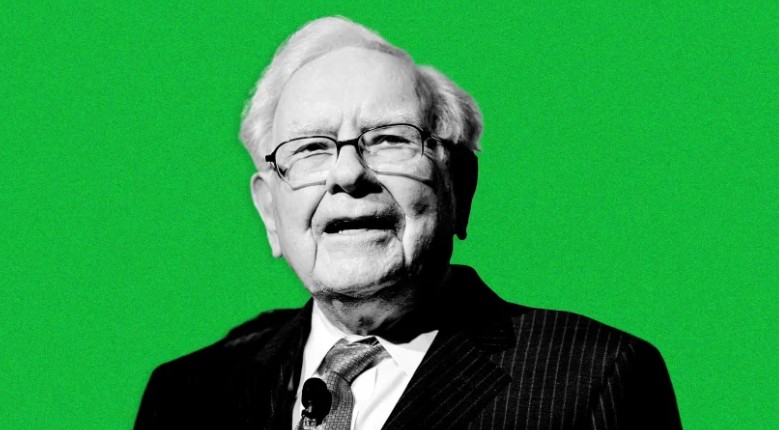
I’ve long admired Warren Buffett.
He’s been a bit of a mentor to me… not in the literal sense, but in the way someone can shape how you think simply by how they move through the world. I’ve read The Snowball, that long, patient biography that traces not just Buffett’s wealth, but his temperament, his discipline, his slow accretion of trust and judgment over decades. I’ve also read Tap Dancing to Work, which captures his voice more directly… the joy he takes in the work itself, the clarity of thought, the deep sense of proportion about what matters and what doesn’t.
And then there was Charlie Munger.
Buffett’s longtime partner…his intellectual counterweight. Famous in his own right for Poor Charlie’s Almanack, with its latticework of mental models, its insistence on clear thinking, inversion, and avoiding stupidity before chasing brilliance. Charlie passed away in November 2023, just shy of his hundredth birthday… and with him went a particular kind of sharp, unsentimental wisdom that doesn’t show up often anymore.
Any interview, any clip, any video where Buffett is speaking… especially alongside Charlie… I’ve always paid attention.
He’s always intrigued me.
Not because of the wealth. That part came gradually, methodically, almost quietly. But because of how he is as a person. The steadiness. The lack of performative urgency. The comfort with waiting. The discipline of saying no.
In a sense, he’s always felt irreplaceable to me: not as a billionaire, but as a temperament.
Which is why I never really thought about him needing a replacement.
Of course that’s naïve… because life doesn’t exempt even the most iconic figures from time.
Succession isn’t optional. It’s inevitable.
I was watching Bloomberg TV when the conversation turned to Buffett having named a successor. I was immediately curious about his choice because you can’t duplicate Warren Buffett. You can’t copy-paste that kind of judgment. And knowing what I know about him, I doubted he’d treat succession as a simple competence exercise.
So I did what I always do when something catches my attention like that… I went digging…piecing together old interviews, comments, timelines. Trying to understand the shape of the decision rather than just the headline.
What became clear very quickly is that this wasn’t succession as replacement. It was succession as continuity of judgment.
The man stepping into the role, Greg Abel, wasn’t being positioned as “the next Buffett.” That would have been a failure from the start. He was being trusted as someone who already understood what kind of leadership Berkshire requires… and, just as importantly, what kind it does not.
That’s a very different bar.
Buffett didn’t need someone brilliant. There are plenty of brilliant people in finance. He needed someone who could live with restraint. Someone who wouldn’t feel compelled to act just because they could. Someone who understood that in some organizations, the most valuable thing a leader does is not interfere. That’s the temperament piece I referred to earlier.
As I sat with these ideas, it struck me how often succession planning gets flattened into skills transfer.
- Who can do the job.
- Who knows the systems.
- Who can step in without disruption.
But that framing misses the real risk.
Because when a long-standing leader exits, what disappears isn’t just operational knowledge. What disappears is a way of seeing…a sense of proportion…a decision logic that has been quietly shaping outcomes for years.
Buffett’s real legacy isn’t capital allocation models or annual letters. It’s a culture built on patience, long-term thinking, decentralized trust, and an almost radical resistance to noise.
If that culture wasn’t understood… if it wasn’t embodied… no successor, however competent, would be enough.
That’s the part of this story that feels most instructive to me.
Succession planning isn’t about preparing someone to take over a role.
It’s about recognizing who already carries the future of the organization in how they think, decide, and restrain themselves. If I were a betting woman, I’d say that the end Buffett had in mind was never spectacle or reinvention. It was durability.
And when the end is that clear, the successor doesn’t need to pitch loudly because they’ve already been revealing themselves quietly, over time and the alignment is instantly apparent.
What this story ultimately reminded me of is this:
Succession is not a logistics problem. It’s an identity question. Most organizations don’t struggle with succession because they didn’t plan.
They struggle because they never named what actually needed to survive them.
Strategic Alignment Prompt
If you stepped away tomorrow…
- What judgment would leave with you?
- What decisions do people defer to you on without knowing why?
- What values are being enacted, but never articulated?
That’s not a future concern. That’s present-day alignment… asking for your attention.
About Giselle
I’m Giselle Hudson, a Business Diagnostic Specialist for leaders under pressure. I work with leaders managing teams, businesses, or nonprofits to bring clarity to situations where things aren’t working as expected — and it’s not fully clear why. I examine how decisions are being made, so you’re not reinforcing what’s not working, but moving forward with clear direction.
If you are carrying a decision that affects income, reputation, or organizational stability, don’t move it forward alone.
 Giselle Hudson | Pre-Decision Advisory for Leaders Under Pressure