


Mission statements are meant to foster commitment amongst employees and most companies have one. Except it is often viewed as window-dressing, seen as abstract, and often totally disconnected from the daily reality of the work. When these statements are created top-down without employee input, or when company actions contradict the stated values, they can lead to cynicism rather than inspiration.
I started thinking about oaths today because I came across The Night’s Watch oath from Game of Thrones. It is a vow of honor, duty, and sacrifice.
I wondered about the etymology of the word and did some digging.
An oath is not a promise. It’s older, heavier, and more dangerous.
The word oath comes from Old English āþ, rooted in Proto-Germanic aiþaz. Long before contracts, KPIs, or HR policies, an oath was a binding speech act. To swear an oath was to call something larger than yourself as witness. God. The gods. The law of the land. Your own life.
In ancient cultures, an oath wasn’t about intention. It was about identity.
You weren’t saying what you would do.
You were declaring who you now were.
Break the oath, and you weren’t just unreliable. You were unsafe. Untrustworthy. Exiled. Sometimes cursed. Sometimes killed.
This is why oaths were spoken aloud, in public and often with ritual – placing your hands on a stone, sword, altar, or earth.
The Oath of the Night’s Watch removed choice fatigue. It answered one question relentlessly:
What is my post and what must I protect?
The oath wasn’t aspirational…it wasn’t about what they were striving to do. It was written in the present tense.
What would an oath look like in today’s business context?
I decided to take a little creative latitude and riff off of the Oath of the Night’s Watch.
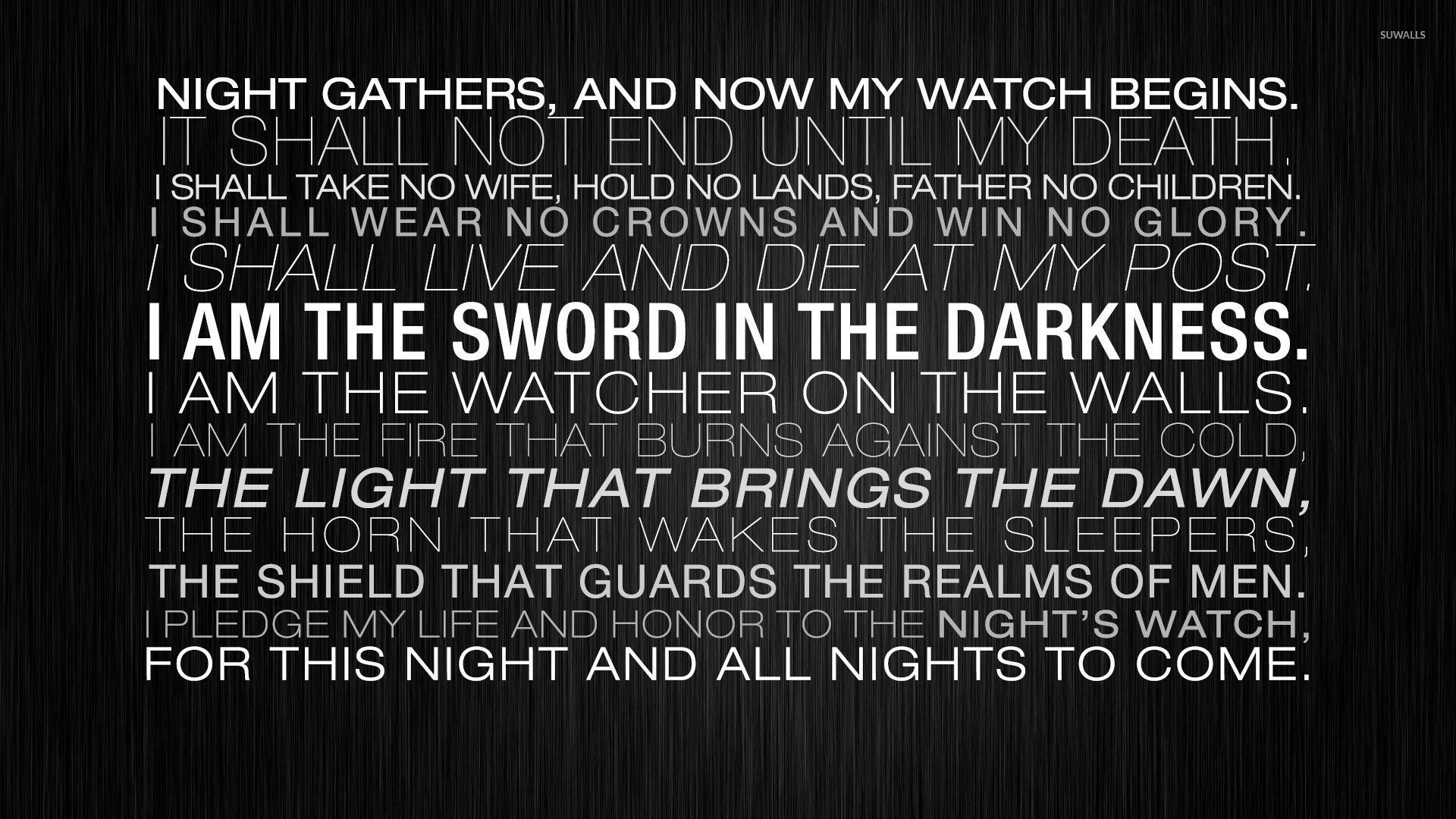
What struck me most about the Night’s Watch wasn’t the severity of the vow, but its precision.
- They knew what they were guarding.
- They knew what threatened the realm.
- And they knew that if no one stayed awake at the edges, the collapse wouldn’t announce itself until it was too late.
In business, we rarely name the “cold,” but we feel it.
The slow erosion of trust. Quality slipping in small, justifiable ways. Client care becoming transactional. Data handled casually. Culture thinning out while everyone is busy hitting targets. These aren’t dramatic enemies. They’re quiet ones. And without a shared understanding of what we are defending, people default to protecting themselves instead.
The Watch didn’t care where you came from.
Outlaw or lord, it didn’t matter once you arrived. What mattered was whether you could hold the wall. In a modern context, that’s not ideology, it’s clarity. Performance over pedigree. Contribution over title. Results over politics. When organizations say they value this but reward something else, cynicism creeps in. When they actually live it, commitment follows.
There was also no ambiguity about responsibility.
I shall live and die at my post. Not as drama. As orientation. This is mine to guard. No diffusion. No hand-offs disguised as collaboration. No one else is coming. Most accountability breakdowns I see aren’t caused by laziness… they’re caused by fog. Too many posts. Too many owners. Too much plausible deniability.
And then there’s the part most modern cultures struggle with the most… renouncing glory.
No crowns. No applause. No individual heroics that weaken the collective. The work mattered more than being seen doing the work. Imagine how different team dynamics would feel if collaboration carried more weight than performance theatre, and leadership was measured by what held together quietly, not who shone the brightest.
The Night’s Watch also stayed deliberately removed from the petty politics of the realm.
Not because politics didn’t exist, but because distraction weakened the watch. In business, this translates to discipline. Staying anchored to the core mission even when trends, internal power plays, or short-term wins tempt you away from what actually sustains the organization long-term.
And perhaps most importantly, the Watch offered a clean slate.
You were not endlessly punished for who you had been. You were accountable for who you chose to become. Mistakes weren’t erased, but they weren’t weaponized either. They became part of the learning that made the Watch stronger. That’s not softness. That’s resilience.
The oath as a living practice
The power of the Night’s Watch wasn’t just in what they believed, but in the fact that they said it out loud, together. A shared creed. Spoken. Remembered. Returned to. Not a passive mission statement. Not values buried in a slide deck. A living declaration of who they were and what they guarded.
It wasn’t inferred. It wasn’t buried in a handbook no one opened after week one.
Spoken. Remembered. Returned to. That’s what gave it weight.
Maybe this is where modern organizations keep missing the mark.
- They rely on implied commitment instead of declared responsibility.
- They hope alignment will emerge instead of being named.
- They expect loyalty without ever asking people to cross a line that matters.
An oath doesn’t make people perfect. It makes them oriented. It answers, without theatrics:
- This is the wall.
- This is the watch.
- This is what we protect when it’s dark.
And this… is who we are now.
In a modern organization, an oath wouldn’t live as copy.
It would live as a moment. A threshold you cross when you enter. A reset you return to when drift creeps in. A reminder in moments of failure, when it would be easier to defend yourself than to remember who you are.
An oath only works if it can be carried without notes.
If you can’t say it when you’re tired… when you’re defensive… when you’re under pressure… then it isn’t an oath. It’s just language, and language without risk has never been enough to hold a wall.
Strategic Reflection Prompt
Where in your work or leadership are you relying on implied commitment instead of a spoken vow… and what would change if the “watch” was clearly named and owned?
About Giselle
I’m Giselle Hudson, a Business Diagnostic Specialist for leaders under pressure. I work with leaders managing teams, businesses, or nonprofits to bring clarity to situations where things aren’t working as expected — and it’s not fully clear why. I examine how decisions are being made, so you’re not reinforcing what’s not working, but moving forward with clear direction.
If you are carrying a decision that affects income, reputation, or organizational stability, don’t move it forward alone.
 Giselle Hudson | Pre-Decision Advisory for Leaders Under Pressure