
Today’s 𝗦𝘁𝗿𝗮𝘁𝗲𝗴𝗶𝗰 𝗔𝗹𝗶𝗴𝗻𝗺𝗲𝗻𝘁 𝗝𝗼𝘂𝗿𝗻𝗮𝗹 𝗽𝗼𝘀𝘁 in two sentences:
The history behind Thanksgiving illustrates how dramatically our understanding of events can change depending on where we begin the story and whose account we privilege. In organizations, these same choices influence what we identify as the problem, whom we hold accountable and what we ultimately decide to fix.
The Story We Usually Hear
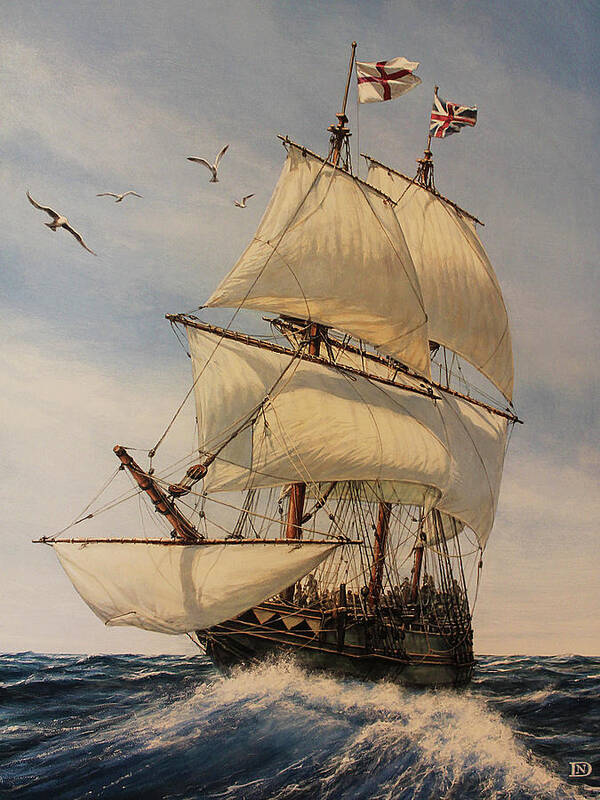
In 1620, 102 passengers crossed the Atlantic aboard the Mayflower. Their journey was arduous, and by the time they had endured their first winter in what would become Plymouth Colony, roughly half of them had died. In the autumn of 1621, the surviving settlers celebrated their harvest in the company of members of the Wampanoag nation. It is easy to understand why an account of survival, cooperation and gratitude would appeal to generations of Americans.
What happens, though, if we begin the story six years before the Mayflower arrived?
What Came Before
In 1614, an English sea captain named Thomas Hunt kidnapped Indigenous men, including Tisquantum, better known as Squanto, intending to sell them into slavery. Tisquantum eventually made it back to his homeland in 1619, only to discover that an epidemic had devastated his community. The place where the Pilgrims would subsequently establish their settlement was his home. He would become one of the people instrumental in helping the settlers survive.
Ousamequin, the Wampanoag leader, had to make decisions about the security of his people at a time when their population had been severely diminished by disease. In the spring of 1621, he agreed to a treaty of mutual protection with the English. It served a purpose for both communities at the time.
What Happened Afterwards
If we extend the story beyond the harvest celebration, we discover that as English settlements expanded, so did the pressure on Indigenous lands. In 1675, Rhode Island’s deputy governor, John Easton, recorded grievances expressed by Indigenous leaders, including disputes over land transactions and the destruction of their crops by English livestock.
The conflict that erupted in 1675 brought devastating consequences. Indigenous people were killed, displaced and enslaved. Some were shipped to Barbados and Jamaica, linking this history to our own region. The Wampanoag people nevertheless survived and continue to live in their ancestral homelands today.
Even the gathering itself looks different depending on whose account you read. Mashpee Wampanoag historian Paula Peters has explained that the settlers’ celebratory gunfire was interpreted as a possible threat by the Wampanoag.
How One Episode Became the Story
The description of the 1621 gathering as the first Thanksgiving came much later. In 1841, Alexander Young, an American minister and historian, added a footnote to an eyewitness account, identifying the gathering as such. A particular episode in a much longer history eventually came to represent the relationship between two peoples.
The history is of an entirely different magnitude from the situations I encounter in my work, but it raises a question relevant to organizations: Where do we begin the account of a problem? The point at which someone noticed the problem may be considerably removed from the point at which the conditions that produced it were created.
Where an Organizational Problem Begins
Suppose a manager tells me that her department has been missing deadlines and that the staff need to be held more accountable. If I begin my investigation with the missed deadlines, I might conclude that the department needs tighter performance controls.
What if, six months earlier, the company introduced an additional layer of approvals without adjusting the time allotted to complete the work? What if employees raised concerns at the time and nobody paid attention? The staff may now be held accountable for delays generated elsewhere in the organization.
People don’t necessarily set out to deceive us when they recount what happened. They begin where the experience became significant to them and tell the story from the position they occupy. Problems arise when the person with the authority to decide what needs fixing also gets to determine where the account of the problem begins.
During a diagnostic, I want to understand what preceded the behavior, what changed over time, whose experience is missing and whether the explanation we have been given is supported by the chronology. Widening the inquiry may confirm the original assessment. It may also reveal that we were about to intervene in the wrong place altogether.
Before deciding what a story means, it is worth asking whether we have heard enough of it to draw that conclusion.
Strategic Reflection Prompt
Think about a recurring problem in your organization. Who determined where the story began? If you went further back and invited the people affected by it to reconstruct what happened, would you still be pursuing the same solution?me solution?
References & Further Reading
- Billy Bob Thornton Wants to Tell the Real Story of the Mayflower | People, November 2026. People.com
- Early Encounters: The First Thanksgiving | Smithsonian National Museum of the American Indian. The “First Thanksgiving”
- The First Thanksgiving: Historical Timeline | Smithsonian National Museum of the American Indian. The “First Thanksgiving”
- A Relation of the Indian War, 1675 | John Easton, via Plimoth Patuxet Museums. Plimoth Patuxet Museums
- Colonial Enslavement of Native Americans | Brown University, research by historian Linford Fisher documenting forced transportation to the Caribbean. Brown University
- A Closer Look at the Thanksgiving Tale | American Indian Magazine, incorporating Wampanoag perspectives, including Paula Peters. American Indian Magazine
- The First Thanksgiving | Pilgrim Hall Museum, including Alexander Young’s 1841 identification.
I’m Giselle Hudson, The Pre-Fixer™.
For nearly three decades, I’ve worked with business owners and leaders across the Caribbean who carry important decisions largely on their own, often when problems keep returning, solutions fall short, or implementation stalls.
When I ask business owners what problem they can’t seem to solve, the answer is usually “people.” So I ask them to tell me more, because people and businesses are rarely as simple as they first appear.
I help them understand what’s really causing the problem before they spend more trying to fix it. And where needed, I help design the solution and guide their teams to put it into practice.
Get Clarity before the Fix.
What are you trying to make sense of right now?