


We all see problems. Or so we think. What we really see are problem’s symptoms, not the cause of a particular problem – that is, why it occurred in the first place.
I saw this illustration below recently showing problem awareness in companies.
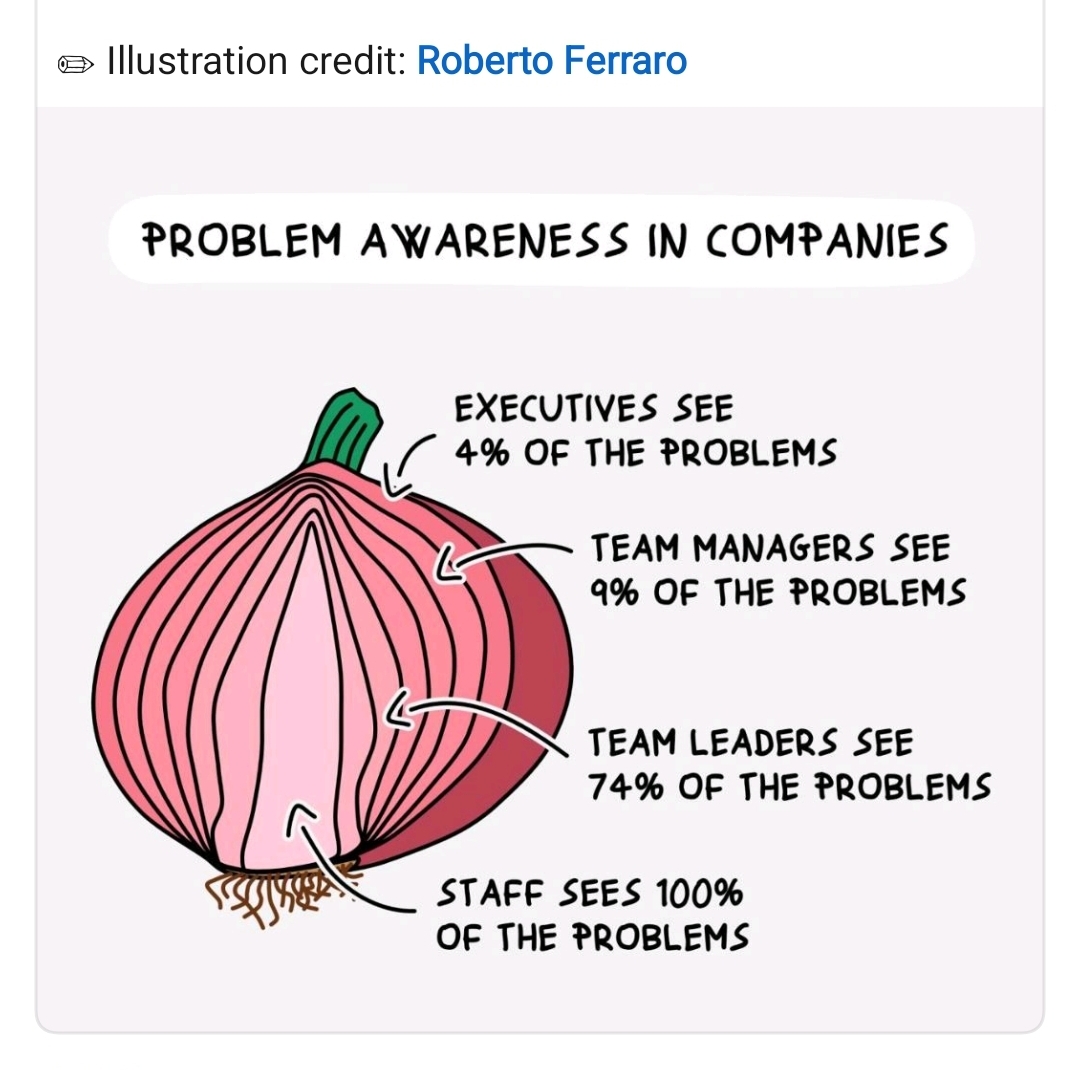
I think it might be more accurate if the word symptoms was included in this diagram as in staff sees 100% of the symptoms, because if we really saw the problems then we would know how to fix them. Problems continue to plague organizations as they “medicate” the symptoms hoping the problems will go away.
In other words, you know you’re treating a symptom if a problem persists.
I found these five steps to solving any problem in a book by Eileen McKusick called Electric Body, Electric Health.
1. Identify the problem. Clearly recognize, label, and state to yourself what the problem is.
2.Believe that it’s possible to solve the problem. This is where we often get hung up. I’ll get someone to identify a problem that they haven’t been able to solve, and I’ll say repeat after me, “I believe it’s possible to solve this problem.” When they say that, tension immediately arises in their bodies—revealing all these subconscious places where they don’t believe it’s possible, which is the biggest reason why they’re not solving the problem. You have to get every part of your being on board so that when you say, I believe it’s possible to solve this problem, the truth of that statement resonates with your body.
3.Desire it with all your heart. You have to be absolutely determined to see this through and solve the problem. Stay connected to the feeling of that desire and the why behind it.
4.Believe that the resources you need to solve the problem are at hand. Because you believe that those resources are available to you, you will be able to locate them.
5.Implement those resources to solve the problem. Then move on to the next problem!
So what’s missing in your problem solving approach?
We first need to identify the problem. And then there is the issue of belief. Do you believe that the problem can be solved and that you have the resources available to you to solve the problem? The other factor for consideration is how important is it to you to solve this problem? Are you willing to go the distance? I think many times we give up because our desire to solve the problem is not that great. Sure we want to solve it but at what cost? Perhaps we are comfortable with the pain and discomfort that this particular problem is causing us.
You’ve all probably heard this story…
A man walks into an old general store. As he moves through the aisles, he notices a dog lying beside the checkout counter where the owner is sitting. The dog is whimpering and whining when he walks in, and again he notices him doing the same thing when he approaches the owner to check out. He asks the owner, “Your dog seems to be in pain. What’s the problem?”
The owner responds, “Oh, that’s just old Rover. That’s where he lays and naps every day. He’s whimpering and whining because over time a nail has worn through the floorboard, and it hurts him.”
“Why doesn’t he just move?” says the visitor.
The owner replies, “Well, I guess it just doesn’t hurt enough to move.”
Perhaps the real truth is that you have no interest in a solution.
What’s your nail?
Some of us have career nails. Jobs we don’t enjoy. Work that drags us down and drains our energy. This may lead to health nails – bad eating – too much salt, sugar…too much junk overall. Some of us have dream nails. Dreams that we really want to pursue but aren’t for some reason and idea nails – ideas we have been thinking about for a while but haven’t acted on yet. Many businesses have in particular, nails in marketing and sales – never knowing what is working, what isn’t working and how to get more business.
So how can you become more effective at solving problems permanently?
Instead of simply identifying the problem which usually becomes a case of who did it as in, somebody didn’t deliver, or someone disappointed you, you need to stop thinking it’s someone’s fault. Change your focus from whom to what and reframe it as a systems problem.
Tomorrow I will talk a bit more about this approach in action. While you wait, think about a recurring problem in your business and start with Eileen’s five suggestions for treating with your problem. When you discover your “nail” then ask yourself if now would be a good time to stop hurting once and for all.
Want to get in contact with me to help you with your business? Here’s how to do it!
- To chat with me about your business or a potential project – click here
- Click here to listen to why “Clarify before you amplify” is not just a catchy phrase, but a foundational strategy for any business
- To learn about me, go here! and click here to learn more about my services.

