


Today’s Strategic Alignment Journal post in two sentences:
The story behind the first Matchbox miniature vehicle got me thinking about how a solution to one specific problem can reveal possibilities that extend far beyond the circumstances that prompted it. When we focus entirely on making a problem go away, we may miss what the experience is teaching us about the needs, assumptions and opportunities involved.
Matchbox has just been released, and at the beginning of the film, one of the characters tells the story of how the first Matchbox car came about.
I was curious. So, as I often do, I followed my nose and went looking for the story behind it.
What I discovered was interesting, not simply because of how Matchbox began, but because it got me thinking about how we understand problems, the solutions we develop and the opportunities we sometimes discover along the way.
The story takes us back to England in the early 1950s.
Jack Odell, a toolmaker and one of the founders of Lesney Products, had a daughter who wanted to take a toy to school. The school had a rule that children could bring toys only if they were small enough to fit inside a matchbox. Rather than challenge the rule, Odell made a miniature metal road roller that his daughter could carry to school. That little road roller became the inspiration for the first Matchbox miniature vehicle, introduced in 1953.
Odell was not setting out to create a worldwide toy brand. He was responding to a particular need within a particular set of circumstances. His daughter wanted to take a toy to school. The school had a restriction. He understood both and found a way to satisfy the need without violating the restriction.
What began as a solution to one child’s problem eventually became something much bigger.
The miniature vehicles proved attractive to children well beyond that original situation. They were affordable, portable, detailed and collectible. Over time, Matchbox became one of the most recognizable toy brands in the world.
The problem was getting a toy into school. The opportunity was creating miniature toys that children everywhere could own, carry and collect.
The original problem was quite specific, and the solution was equally specific, yet the process of developing that solution revealed possibilities that extended well beyond the circumstances that prompted it.
How often do we approach a problem with the sole intention of making it go away?
We identify what is not working, decide what needs to change and invest our time, money and resources in making that change happen. Once the immediate problem has been resolved, we consider the matter closed.
Some problems simply need to be solved but I wonder how much we miss when our attention is directed entirely toward the resolution rather than also considering what the problem and our response to it may be revealing.
- A business experiencing declining sales might concentrate on improving its sales process without examining what customers are telling it about their changing needs.
- An organization struggling with employee performance might invest in more training without considering whether the way work is structured is preventing people from performing well.
- A company dealing with repeated customer complaints might focus on resolving each complaint without recognizing that those complaints are revealing something about its service model.
In each case, the presenting problem demands attention, but resolving it does not necessarily mean we have understood everything that contributed to it, or recognized what else we might learn from it.
The opportunity may be in what the problem reveals.
Curiosity allows us to look beyond the immediate problem and explore what else the situation might be telling us, rather than limiting our attention to what needs to be resolved.
What assumptions are we making about the problem? What are we learning about the people affected by it? What does the situation tell us about how our systems, processes or relationships are working? And is there something of value in what we are discovering that we had not previously considered?
Another aspect of the Matchbox Story worth exploring
The school’s restriction could easily have been viewed as the problem. But the restriction was simply a condition within which the real need had to be met. Odell did not need to change the school’s rule to satisfy his daughter’s wish. He needed to understand what she wanted to accomplish and find an appropriate way to make it possible.
That raises another question about how we define the problems we are trying to solve. Sometimes what we identify as the problem is actually a constraint, a symptom or an assumption about what needs to change. If we begin with the wrong understanding, we may spend considerable effort trying to remove something that does not necessarily need to be removed.
Not every restriction should be accepted, and not every problem presents an opportunity
There is no reason to romanticize difficulties or assume that something valuable must emerge from every challenge. The point is that we cannot recognize what a situation may be revealing if we have already decided what it means and what must be done about it.
I also think there is something important about recognizing when a solution has relevance beyond the circumstances in which it was developed. Odell’s miniature road roller solved an immediate problem. But the possibility of Matchbox as a product depended on recognizing that other children might value the same qualities, even if they had no school rule to contend with.
That required moving from understanding one person’s need to recognizing a wider market. The original solution provided the starting point, but the larger opportunity required a different set of questions.
The story within the story
We can become so occupied with fixing what is in front of us that we fail to examine what the experience is teaching us.
We may solve the immediate problem and still miss an opportunity to understand our customers better, improve the way we operate, question an assumption or recognize a possibility we had not considered.
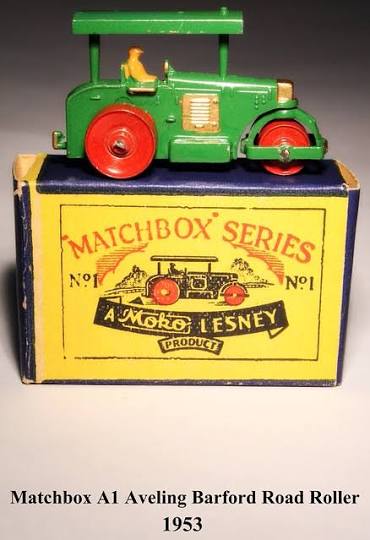
The first Matchbox miniature vehicle was a road roller, not a car. It was created in response to a very specific situation. Yet what followed became far more significant than the problem that inspired it.
Sometimes the value of solving a problem is not limited to the solution itself. It is also in what we come to understand because we took the time to examine it.
Strategic Reflection Prompt
Think about a problem you have recently solved or are currently trying to solve. Have you focused entirely on making the problem go away, or have you also considered what the situation is revealing about the needs, assumptions, constraints and opportunities involved? What might you be overlooking if you consider the matter closed once the immediate problem is resolved?
About Giselle
Most costly decisions begin with a wrong read of the situation.
I’m Giselle Hudson — The Pre-Fixer. I help leaders see the real problem before they act, in my writing and in my work. I don’t fix; I pre-fix. Most advisers jump to solutions before they’ve found the real problem. I find it first — the part that isn’t fully visible yet. Once we see that clearly, everything else falls into place, and confident, right action can follow.
Through my daily Strategic Alignment Journal, I explore leadership, decision-making, and the patterns that shape organizations — helping leaders make sense of complexity before they commit significant time and money to the wrong thing.
What’s the one thing about your business that frustrates you most — the thing that, despite your best efforts, you can’t seem to resolve?

