

Today’s Strategic Alignment Journal post in two sentences:
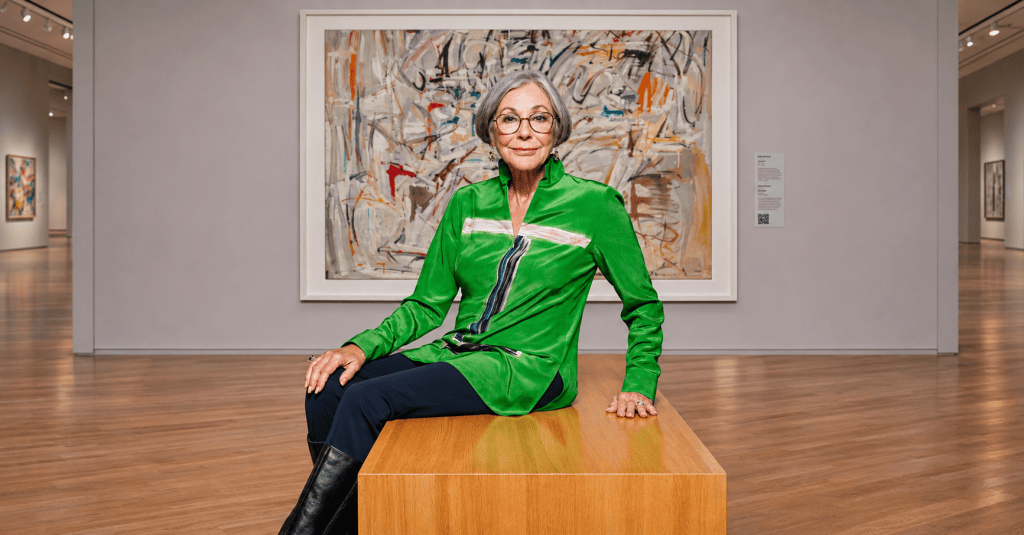
An Instagram post featuring the world’s wealthiest women brought me back to Sam Walton’s Made in America, one of the first success stories I ever read and loved. Curious about his daughter Alice Walton, I began investigating what she had accomplished and discovered a different expression of success, one that raises questions about legacy, personal purpose, and what we choose to build.
An Instagram carousel featuring the five richest women in the world caught my attention. Among the first women featured was Alice Walton, daughter of Sam Walton, the founder of Walmart. Her name immediately took me back many years.
One of the first books I ever read about success was Sam Walton: Made in America. I loved it. It was my introduction to a success story told through the experiences of someone who had built an extraordinary business.
Sam Walton’s account of building Walmart introduced me to the thinking, decisions, determination, and entrepreneurial instincts that contributed to creating one of the world’s largest retail businesses. I remember being fascinated by the opportunity to understand success through the experiences of the person who had achieved it.
Although I had followed Sam Walton’s story, I hadn’t paid much attention to the family in the years following his death in 1992. Seeing Alice featured among the world’s wealthiest women brought that earlier interest back and prompted me to investigate what she had been doing.
I knew the Walton family had inherited extraordinary wealth. What I didn’t know was how Alice had chosen to use hers.
What I discovered was a story about success, personal interests, and the different ways in which people choose to create value.
A Different Expression of Success
Alice Walton was born in Arkansas in 1949, the youngest of Sam and Helen Walton’s four children. Growing up in Bentonville, she developed an interest in art that would eventually become central to her life’s work.
There is an interesting detail about her childhood. As a young girl, she sold candy and popcorn outside her father’s store and subsequently used some of her earnings to purchase a print of Picasso’s Blue Nude.
While her father was developing his retail business, Alice was cultivating an interest that would eventually lead her into an entirely different field.
She initially pursued a career in finance, working in investment banking and establishing her own investment firm. Over time, however, her interest in art became the foundation for a much larger undertaking.
In 2011, the Crystal Bridges Museum of American Art opened in Bentonville, Arkansas. Alice had established the museum to make significant works of American art accessible to people who might otherwise have limited opportunities to experience them. Admission to its permanent collection is free.
It is an interesting development in the Walton family story. Sam Walton built his business around making merchandise available to customers at competitive prices. His daughter was now using the family’s resources to make art more accessible. Different industries, different approaches, yet both involve expanding access to something people value.
When Personal Interests Become Institutional Contributions
Alice Walton did not stop with the museum. She subsequently established the Art Bridges Foundation to bring American art to communities across the United States. Her philanthropic work expanded into education, community development, and healthcare.
In July 2025, the Alice L. Walton School of Medicine welcomed its first class of students. The school’s approach incorporates conventional medical education alongside attention to nutrition, prevention, mental and emotional well-being, and the influence of lifestyle and environment on health.
Its establishment reflects an interest in reconsidering how healthcare is delivered and how medical professionals are educated.
This is particularly interesting from an organizational perspective. Rather than simply investing in additional services within existing healthcare structures, Alice Walton has supported the development of an institution designed around a different approach to medical education.
It illustrates how resources can be directed toward questioning established practices and creating alternatives.
Inheritance Does Not Determine Direction
There is an important reality to acknowledge in Alice Walton’s story. She began with access to financial resources that most people will never possess. Her capacity to establish museums, foundations, and medical institutions cannot be separated from that privilege. Yet financial resources alone do not explain the direction in which someone chooses to deploy them.
Alice could have concentrated exclusively on preserving and growing the family’s financial interests. She could have remained primarily involved in the business that created her wealth. Instead, she pursued interests that had been developing since childhood and eventually translated them into institutions intended to benefit others.
We frequently associate success with financial achievement, organizational growth, market dominance, and measurable returns. These are legitimate measures, but they do not capture every way in which people create value. Sometimes, the more revealing question is what people choose to build once they have the freedom to decide.
What Do We Choose to Build?
When I saw Alice Walton’s name in that Instagram carousel, it was her extraordinary wealth that initially captured my attention. I was curious about what had become of the family behind one of the first business success stories I had read.
My investigation, however, led me somewhere quite different. I found myself looking beyond the billions to the institutions she had established, the interests she had pursued, and the contribution she had chosen to make.
It also brought me back to my first encounter with her father’s account of success. When I read Made in America, I was learning about the creation of a business. Sam Walton’s story was about building something that had not previously existed on that scale.
His daughter’s story is different. It concerns what someone chooses to create with the resources generated by an earlier success.
Both stories involve vision, decisions, and the development of institutions. Their objectives, however, are not the same.
For me, this broadens the conversation about success.
We can spend so much time pursuing particular definitions of achievement that we seldom examine whether those definitions continue to reflect what matters to us. The measures that guided one stage of life or business may not be the most appropriate measures for another.
Alice Walton did not have to replicate her father’s accomplishments to make a contribution of her own, and that may be one of the more valuable lessons in her story.
Success can provide the resources to build something. The question of what is worth building remains ours to answer.
Strategic Reflection Prompt
Are you pursuing a definition of success that still reflects what matters to you, or are you continuing to measure achievement by standards that no longer represent the contribution you want to make?
I’m Giselle Hudson, The Pre-Fixer™.
For nearly three decades, I’ve worked with business owners and leaders across the Caribbean who carry important decisions largely on their own, often when problems keep returning, solutions fall short, or implementation stalls.
When I ask business owners what problem they can’t seem to solve, the answer is usually “people.” So I ask them to tell me more, because people and businesses are rarely as simple as they first appear.
I help them understand what’s really causing the problem before they spend more trying to fix it. And where needed, I help design the solution and guide their teams to put it into practice.
Get Clarity before the Fix.
What are you trying to make sense of right now?

